Summer Fete Fun and Sports Games
The best summer fetes are the ones that feel a little bit noisy, a little bit sunny, and full of people laughing at exactly the right moments. Ours had all of that.
There were stalls to visit, games to try, food to enjoy, and plenty of chances to cheer each other on. But the part that made the day stand out was the sport. From friendly races to team games, the fete gave everyone a reason to join in, whether they were playing, watching, helping, or shouting encouragement from the side.
A summer fete does not need to be perfect to be memorable. In fact, the slightly wobbly moments often become the best stories. A missed catch, a close finish, a team that suddenly finds its rhythm, or a group of children sprinting towards the finish line with huge smiles on their faces. Those are the things people remember long after the bunting comes down.

The fete brought everyone together
A good fete has a simple charm. People arrive at different times, wander between stalls, stop for a chat, and slowly the whole place begins to feel busy and full of life.
That was the feeling on the day. There was a relaxed buzz from the start. Some people came ready to take part in every activity. Others preferred to watch, clap, and enjoy the atmosphere. Both mattered. A fete works best when there is room for everyone.
The setting helped. Open space, fresh air, and plenty of colour made the day feel special without needing anything grand. Bunting moved in the breeze. Tables were set up with cakes, prizes, and games. Children moved from one activity to the next with the kind of energy that only a summer afternoon seems to bring.
There was also that lovely mix of ages that makes community events feel warm. Younger children took part in simple games. Older children enjoyed the chance to compete. Adults helped organise, joined in when asked, and laughed when things did not go quite to plan.
That shared feeling was the heart of the fete. It was not just about winning a race or scoring a point. It was about being there, joining in, and making the most of a day together.
The sports games gave the afternoon a clear focus. They pulled people towards the field, created little moments of excitement, and gave everyone something to talk about. Even those who said they were “just watching” soon found themselves cheering, keeping score, or offering advice from the sidelines.
The best part of a summer fete is often the sound of people cheering for someone else.
That was true throughout the day. Every race and game had its own little crowd. Some cheers were loud and organised. Others were quick bursts of laughter when something funny happened. Either way, the support made every participant feel part of something bigger.
The sports games made the day feel lively
Sports games are ideal for a summer fete because they are active, easy to understand, and fun to watch. They do not need to be complicated. In fact, the simpler games often bring the most laughter.
The day included a mix of energetic activities and light-hearted challenges. There were chances to run, throw, balance, aim, and work as a team. Some games tested speed. Others needed patience. A few depended mostly on luck, which made them even better.
The races were a clear favourite. There is something timeless about a group of children lining up, waiting for the signal, and then rushing forward as fast as they can. The finish line suddenly becomes the most exciting place in the world.
Some races were serious, at least at the start. Faces looked focused. Feet shuffled into position. Everyone wanted a good start. Then, halfway through, the effort turned into laughter. Someone lost a shoe. Someone ran in a slightly curved line. Someone looked back and nearly slowed down too much. The crowd loved every second.
Other games brought out teamwork. These were especially good because they encouraged people to talk, plan, and support one another. Team games can be funny because they show how different people approach the same challenge. Some are calm and careful. Some rush in with great enthusiasm. Some become unofficial coaches within seconds.
The best sports games at the fete had a few things in common:
They were easy to explain.
They allowed lots of people to take part.
They worked for different ages and abilities.
They left space for laughter.
They did not need expensive equipment.
That last point matters. A brilliant fete game can be made with beanbags, cones, buckets, skipping ropes, balls, or simple markers on the grass. The equipment helps, but the energy comes from the people taking part.
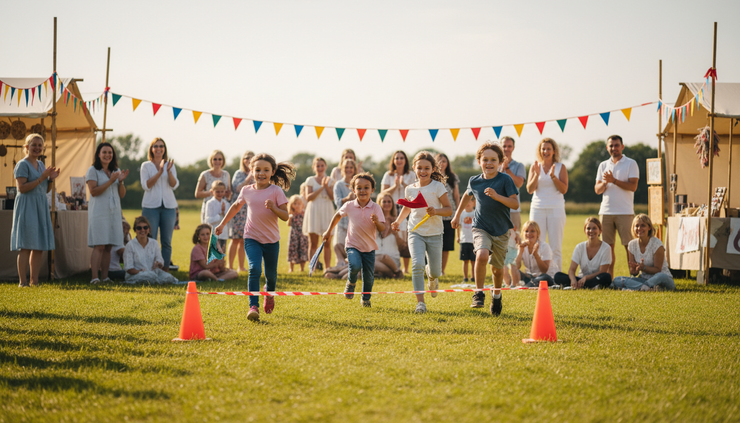
One of the loveliest things about the games was the way they included different kinds of confidence. Not everyone wants to be the fastest runner. Not everyone wants to be watched by a crowd. But when there are several activities, people can find the one that suits them.
Some children enjoyed the races most. Others preferred throwing games or target games. Some liked helping to collect equipment or organise turns. That still counts as taking part. A fete should make people feel welcome, not pressured.
Fun mattered more than scoring. A few people kept track of winners, and prizes always add excitement, but the mood stayed friendly. The applause at the end of each game was just as important as the result.
The small moments made the biggest memories
When people talk about a fete afterwards, they rarely remember the exact order of events. They remember moments.
They remember the person who surprised everyone by winning a race. They remember the team that started badly and somehow caught up. They remember the children who helped each other across the line. They remember the grown-ups who joined in and immediately regretted how fast they had promised to run.
Those moments gave the day its character.
There was joy in the little pauses too. People sitting on the grass between games. Children comparing prizes. Someone deciding which cake to choose. Families gathering near the stalls before drifting back to the sports area when the next activity began.
A fete has its own rhythm. Busy, then calm. Loud, then relaxed. A burst of shouting during a race, followed by quiet chatter while the next game is set up. That rhythm kept the day feeling easy and enjoyable.
The sports games also gave people a reason to mix. Children played alongside friends, but they also cheered for classmates, neighbours, and familiar faces from the wider community. Adults who might not normally speak much found themselves laughing together at the same near miss or close finish.
That is one of the quiet strengths of a summer fete. It creates shared memories without forcing them. People gather because there is something simple and enjoyable happening in front of them.
The games were not about high-level sport. No one needed special training. No one had to be perfect. The point was movement, laughter, and a bit of friendly competition.
A few moments stood out because they showed the spirit of the day:
A close race where everyone clapped for all the runners.
A younger child being encouraged by older children.
A team game where the least confident player scored the winning point.
A funny mistake that made the players laugh as much as the spectators.
A group of helpers quickly resetting the game so the next round could begin.
These are small things, but they matter. They turn an event into a memory.

Food and stalls added to the feeling too. After running around, people were ready for a drink, a snack, or a slower activity. The mix of sport and classic fete fun worked well. Games brought energy. Stalls gave people time to pause. Together, they kept the afternoon balanced.
There was no need for everything to happen at once. The best fete days leave space for people to choose their own pace. Some want to stay close to the action. Others prefer to wander, chat, and return when something catches their attention.
Good planning helped the fun feel easy
A fete may look relaxed on the day, but a bit of planning makes that relaxed feeling possible. The smoother parts often come from simple choices made before anyone arrives.
The sports worked well because they were clear and manageable. People knew where to go, when to take part, and what each game involved. That kept things moving without making the day feel strict.
A few practical details made a difference.
Clear spaces helped each activity feel safe and easy to follow. When races had a visible start and finish, everyone knew where to stand. When throwing games had marked areas, players could take turns without confusion. When spectators had space at the side, they could watch without getting in the way.
Timing mattered too. Short games kept energy high. Children did not have to wait too long. Helpers could reset activities quickly. The whole day felt active without becoming rushed.
The best support came from people who were willing to help in small ways. Someone explained the rules. Someone gathered balls. Someone encouraged nervous players. Someone made sure everyone had a turn. These jobs may not seem big, but they shape the whole experience.
Kind organisation is what makes a busy event feel welcoming. It means thinking about how people will move around, how they will join in, and how to make each activity feel fair.
Prizes can be fun, but they do not have to be large. Small rewards, certificates, stickers, or even a big cheer can make children feel proud. The real prize is often the moment itself, especially when family and friends are watching.
It also helps to have games that can be adapted. If younger children need a shorter distance, shorten the race. If a throwing game is too hard, move the target closer. If a team has fewer players, adjust the rules. Flexibility keeps the spirit friendly.
Weather is always part of any British summer event. A warm, dry day is ideal, but it helps to plan for shade, water, and quick changes. Even on a sunny day, people need breaks. Sports are fun, but tired players need time to rest.
A simple layout can make the day easier for everyone. For example:
Sports area
Open grass, races, team games, throwing activities
Fete stalls
Cakes, games, raffles, small prizes
Rest area
Benches, picnic blankets, shade, drinks
Spectator space
Clear edges, good views, safe distance from play
This kind of setup keeps the atmosphere relaxed. People can move between activity and rest without feeling crowded.
Why days like this matter
A summer fete might seem like a simple afternoon of games and stalls, but it can leave a lasting impression. It gives people a shared experience. It brings different ages together. It creates chances for confidence, kindness, and laughter.
For children, sports games offer more than exercise. They give them a chance to try, to cheer, to lose well, to win kindly, and to be part of a group. Those lessons are easier to learn when the setting feels fun rather than formal.
For adults, the day is a reminder that community does not always need big plans. Sometimes it grows through simple things: setting up a stall, holding a finish-line tape, pouring drinks, clapping for every runner, or helping a child understand the rules of a game.
The fete also showed how powerful shared fun can be. People arrived as separate families, friends, or helpers. By the end, everyone had taken part in the same story. They had watched the same races, laughed at the same moments, and enjoyed the same sunny field.
That is why Summer Fete Fun and Sports Games is more than just a title. It sums up the feeling of the day. Fun came from the stalls, the food, the sunshine, and the conversations. The sports games brought movement, excitement, and plenty of cheering.

The strongest memories will probably be the simplest ones. A cheer at the finish line. A child holding a small prize. A team laughing together after a game. Someone saying they did not plan to join in, then joining in anyway.
Those are the moments that make a fete worth holding.
The day was fun because people took part. The sports worked because they were friendly. The atmosphere felt special because everyone added something, whether they played, helped, watched, or cheered.
A summer fete does not need to be perfect. It needs space, willing hands, a few good games, and people ready to enjoy themselves. This one had all of that, and the sports games gave it energy from start to finish.